

Most researchers spend months—or even years—learning research skills through trial and error.
But many of the skills that improve research quality, publication success, and academic confidence can be learned directly from expert-led training programs for free.
One of the best resources available is the Elsevier Researcher Academy, a free e-learning platform designed to help researchers at every stage of their academic journey. From identifying research gaps to publishing papers and responding to reviewers, these courses provide practical guidance that can immediately improve your research workflow.
Whether you’re a Master’s student, PhD researcher, early-career academic, or independent scholar, these free courses are worth bookmarking.
Why Researchers Should Use These Courses
Research is more than collecting data and writing papers.
Kazakhstan Government Scholarship 2027 Apply now
Successful researchers know how to:
- Identify meaningful research problems
- Conduct strong literature reviews
- Write publishable manuscripts
- Secure research funding
- Use AI responsibly
- Respond to reviewers professionally
- Increase research visibility
Elsevier Researcher Academy offers free training developed by global experts to help researchers strengthen these skills.
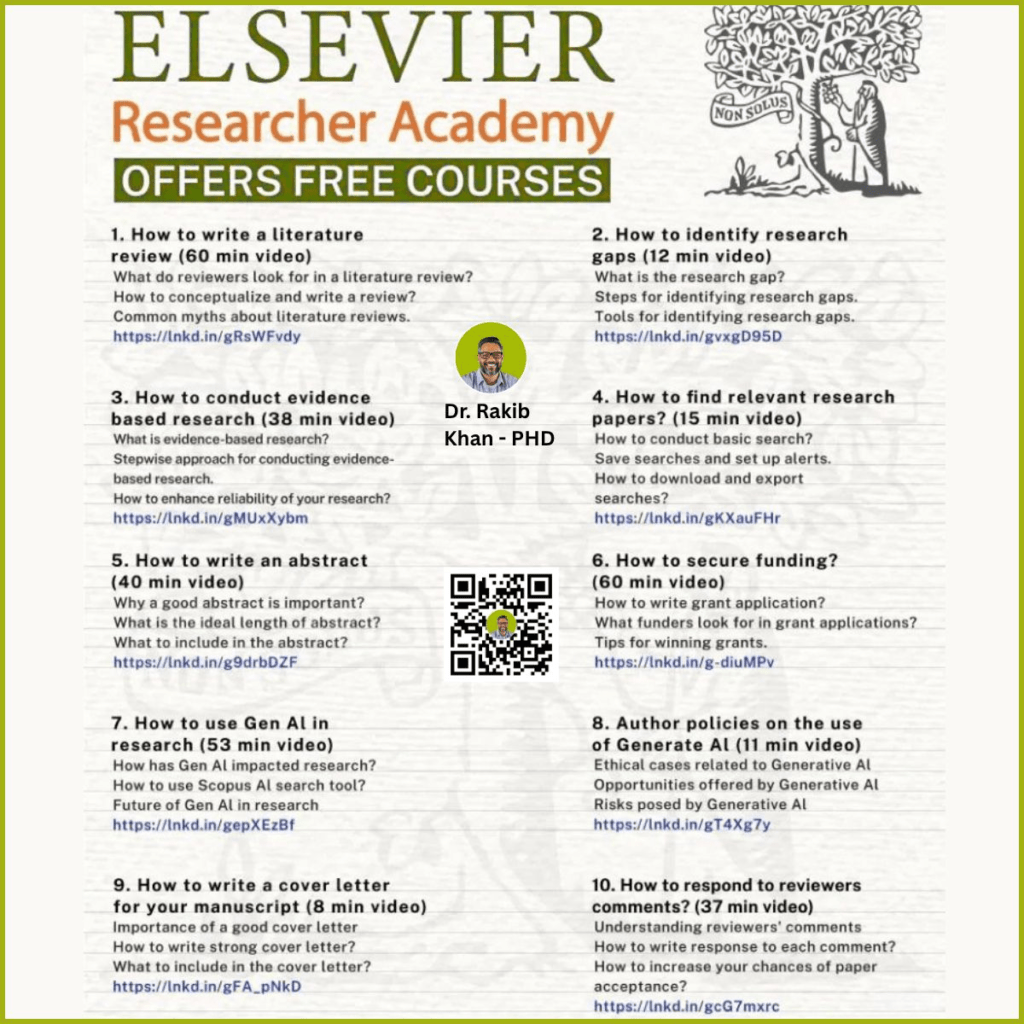
10 Free Research Courses Worth Exploring
1. Literature Review
A strong literature review is the foundation of quality research.
This course helps researchers learn:
- How to organize literature effectively
- How to critically evaluate studies
- How to identify trends and patterns
- How to synthesize findings instead of summarizing articles
Official Course:
https://researcheracademy.elsevier.com
2. Identifying Research Gaps
One of the biggest challenges for students is finding a unique research topic.
This course explains:
- What research gaps are
- How to identify publishable gaps
- Tools and techniques for gap analysis
- How to transform gaps into research opportunities
Official Course:
https://researcheracademy.elsevier.com/research-preparation/research-design/identify-research-gaps
3. Evidence-Based Research
High-quality research should be built on strong evidence.
This course teaches:
- Systematic approaches to research
- Research transparency
- Reducing duplication and research waste
- Improving study reliability
Official Course:
https://researcheracademy.elsevier.com/research-preparation/research-data-management/conduct-evidence-based-research
4. Finding Relevant Research Papers
Finding the right papers can save weeks of research time.
Researchers learn:
- Advanced search strategies
- Literature discovery techniques
- Search alerts
- Efficient database searching
Official Course:
https://researcheracademy.elsevier.com/research-preparation/research-design
5. Writing an Abstract
Editors and reviewers often read the abstract first.
This course helps researchers:
- Write concise abstracts
- Present key findings effectively
- Improve manuscript visibility
- Increase reader engagement
Official Course:
https://researcheracademy.elsevier.com/writing-research
6. Securing Research Funding
Funding can determine whether a research project moves forward.
This course covers:
- Grant proposal writing
- Funding opportunities
- Common reviewer expectations
- Proposal improvement strategies
Official Course:
https://researcheracademy.elsevier.com/research-preparation
7. Using Generative AI in Research
AI is rapidly transforming research workflows.
This course explores:
- AI applications in research
- Benefits and limitations
- Ethical considerations
- Responsible AI usage
Official Course:
https://researcheracademy.elsevier.com/research-preparation/research-design
8. AI Policies for Authors
Many journals now have specific AI guidelines.
Researchers learn:
- Journal AI policies
- Ethical publishing practices
- Disclosure requirements
- Responsible AI-assisted writing
Official Platform:
https://researcheracademy.elsevier.com
9. Writing a Cover Letter
A professional cover letter creates a strong first impression with journal editors.
This course explains:
- What editors expect
- Effective cover letter structure
- Common mistakes to avoid
- Submission best practices
Official Platform:
https://researcheracademy.elsevier.com
10. Responding to Reviewers
Reviewer comments can significantly improve a manuscript when handled properly.
This course teaches:
- Professional response techniques
- Handling criticism constructively
- Revising manuscripts effectively
- Increasing publication success rates
Official Platform:
https://researcheracademy.elsevier.com

Helen Oesha holds a Doctorate in Entrepreneurship and is a dedicated advocate for youth empowerment through education. Since 2021, she has been guiding students toward scholarships and international opportunities, making higher education more accessible worldwide. Oesha platform is widely regarded as a leading source for discovering global opportunities. Having personally experienced the challenges and success of funded doctoral studies, she is passionate about bridging the gap between ambition and access, helping students realize their dreams and reach their highest potential. this helen oesha remove and write Azhar ul Haq Wahid PhD in journalism from university of complutense Madrid,Spain Journalist write accodingly